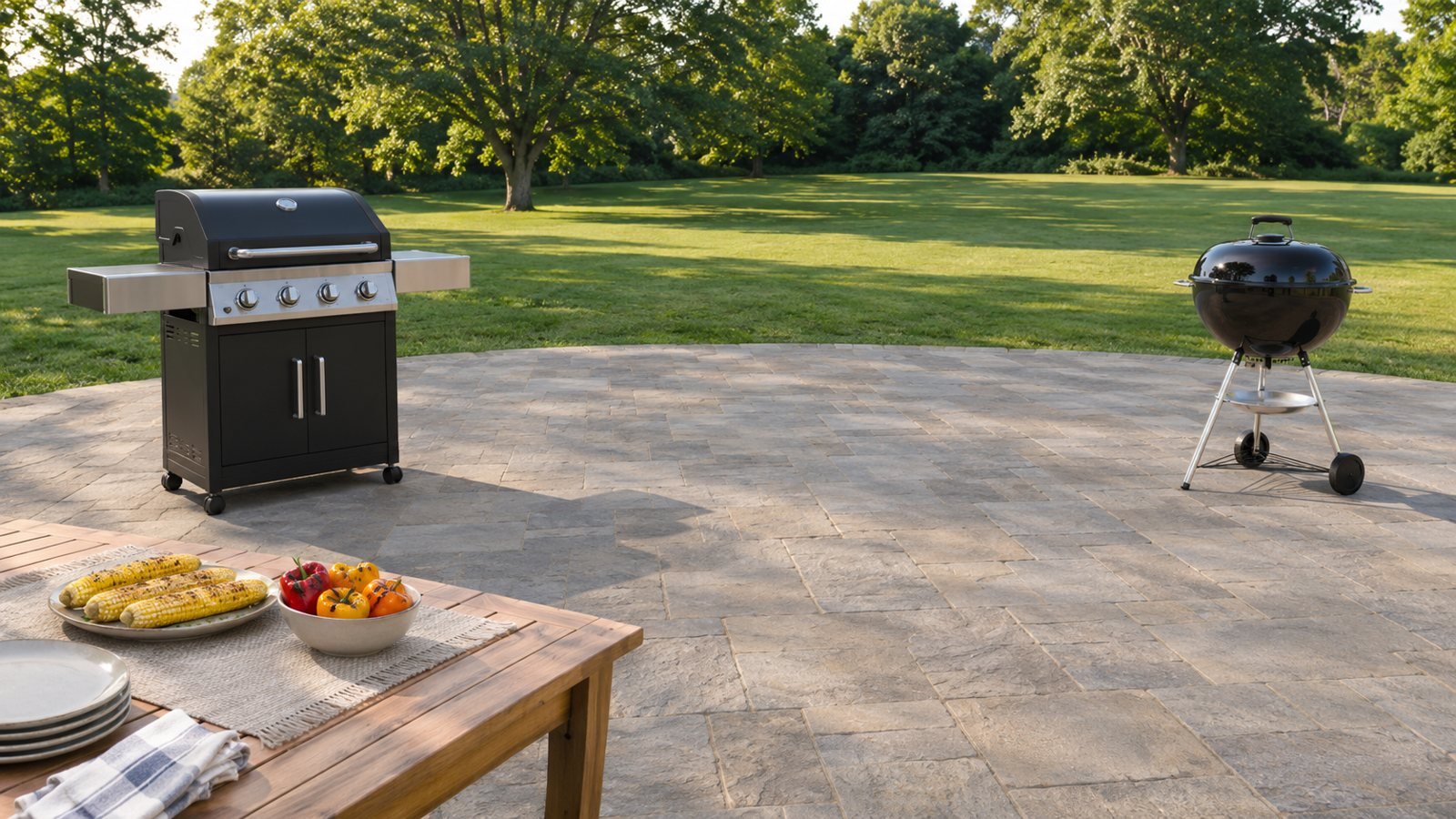
Choose gas if you want straightforward heat adjustments and less fire preparation; choose charcoal if lighting and tending the fire is part of your ideal afternoon. Both can handle a backyard meal. For weekend cooks, the better choice depends on how much attention you want to give the grill before, during and after dinner.
This is a research-based buying guide, not a hands-on comparison. Sizl has not tested these grills. The advice below draws on Weber’s cooking and maintenance documentation and fire-safety guidance, with our recommendations separated from manufacturers’ claims. It compares grill types rather than naming an untested best model.
Is gas or charcoal easier for weekend grilling?
Gas is our recommendation when the meal matters more to you than the fire. In Weber’s gas-or-charcoal discussion, the practical distinction is convenience: gas has knob-based heat control, while charcoal appeals to people who enjoy lighting fuel and waiting for it to become ready.
Think about an ordinary Saturday, rather than the biggest cookout you might host. If you want to put vegetables and burgers on while preparing the rest of dinner, gas is the more natural starting point. If you want an afternoon built around cooking outdoors, charcoal’s extra involvement may be the attraction.
| Priority | Gas | Charcoal |
|---|---|---|
| Getting started | Ignition and preheating | Light coals and let the fire develop |
| Adjusting heat | Change the burner settings | Manage fuel, airflow and food position |
| Regular cleanup | Grates, grease system and burners | Grates, bowl and cold ash |
| Best fit | Convenience-focused cooking | Cooks who enjoy managing a fire |
These are ownership differences, not scores for food quality. Gas still requires preheating and maintenance. Charcoal is not automatically difficult, but it asks you to learn a different set of controls. Don’t buy it out of a sense that using gas makes a backyard meal less legitimate.
Which grill gives you better control over the food?
Either type can provide direct heat for browning and indirect heat for gentler cooking. Weber’s gas cooking guide explains how to leave the burner beneath the food off while nearby burners supply heat. That setup matters more than a grill’s appearance.
For example, you can brown a thick cut over a lit area, then move it away from the strongest heat to finish. Vegetables can occupy a different area from meat. When comparing gas grills, ask the seller to show how the burner layout creates that gentler space with the lid closed.
With charcoal, airflow is a central control. Weber’s charcoal temperature guide describes how opening vents supplies oxygen and increases heat, while restricting airflow reduces it. Small changes need time to take effect; repeatedly opening and closing vents makes learning harder.
Our buying preference is a grill whose controls you can understand before paying. On a charcoal kettle, inspect how easily you can reach and adjust the vents. On gas, look for clear controls and a usable indirect cooking area. A larger cooking surface is not a substitute for a layout that suits your meals.
Does charcoal always make food taste better?
There is no universal flavor winner established by the sources used here. Weber reports that its own blind tastings did not reveal a significant difference between gas and charcoal cooking. That is a manufacturer’s account, not an independent test by Sizl, and the page does not provide enough methodological detail to settle the debate.
Treat that finding narrowly: a promise that charcoal always tastes better is too strong. Your preference can still be real. If the smell of the fire and the process of cooking over coals are what you want from the weekend, those are valid reasons to choose charcoal without presenting them as a measured advantage.
Before shopping, write down the food you actually want to cook: burgers and corn, a whole chicken, or a slowly cooked roast. Then ask how each candidate handles those meals. Weber’s direct-and-indirect guidance supports both browning and gentler finishing on gas; its charcoal guidance also covers different heat arrangements.
We would not pay for a fuel type solely because a sales description promises restaurant flavor. Put the money and attention toward a grill you will use, a manageable cooking setup and a way to check food temperature. Choosing charcoal for enjoyment is sensible. Choosing it because every gas-cooked meal supposedly lacks flavor is not supported here.
How much cleaning and fuel management will you take on?
Gas avoids a charcoal ash job, but it is not maintenance-free. In An Ounce of Prevention, Weber calls for attention to burner openings, the cookbox, grease tray and catch pan. For charcoal models, it identifies removing ash as a regular task.
Before buying, ask to see how those parts come out. Can you reach the grease tray without awkward lifting? Does the ash catcher detach cleanly? Can you find instructions and replacement components for the exact grill? These are shopping checks, not claims that one material or brand will last longer.
Charcoal cleanup must wait until the fuel and ash are completely cold. The U.S. Fire Administration’s outdoor-fire guidance says cooled coals belong in a metal can with a lid. Plan that disposal route before the first cook, rather than treating the ash as ordinary household trash.
For the budget, compare the complete purchase rather than the advertised grill price: fuel, a suitable cover, cleaning supplies and whatever starting equipment the manual requires. No current prices or measured running costs are supplied here, so we cannot honestly promise that either fuel will be cheaper for your household.
Which should you buy for your backyard?
Start with where the grill can safely operate. NFPA’s Grilling Safety sheet requires outdoor use for propane and charcoal grills and placement away from the home, railings, eaves and branches. It also says never to leave a grill unattended. Follow the specific grill’s clearance instructions.
Measure that usable location, including access to controls and space to move food, before comparing cabinet widths. If the grill only fits by crowding a combustible surface, choose another location or reconsider the purchase. More burners or a wider kettle do not solve an unsuitable cooking space.
- Choose gas if simple heat adjustments and convenient meal preparation are your priorities.
- Choose charcoal if you actively want to learn fire management and accept the cold-ash cleanup.
- Favor either grill only after confirming a useful indirect cooking area and accessible cleaning parts.
- Skip extras that displace the features you will use during an ordinary weekend meal.
For the convenience-focused reader, our pick is gas. For the reader who sees the fire as part of the hobby, it is charcoal. Neither recommendation depends on an invented taste test or lifespan estimate. Choose the routine you want to repeat, then compare individual grills within that fuel type.
Sources
Sources checked November 16, 2026. Manufacturer guidance supports the operating details; the buying recommendations are Sizl’s editorial judgment.