A useful gear recommendation starts with a clear account of the evidence. Sizl labels research-led buying guidance separately from hands-on reviews, explains the trade-offs, and never claims a cooking test that did not happen.
Two kinds of evidence
Research-led guides
Based on the maker’s data and published reviews. We link the material used and distinguish specifications from independent observations.
Hands-on reviews
The article must say which equipment was used, what was cooked, the conditions and the results. Without that record, we do not call it tested.
A clear limit
A feature list cannot establish heat consistency, durability or food quality. Where the evidence does not answer a question, we say so.
How a guide takes shape
- Define the cooking job: the household, outdoor space, fuel preference and kind of meals the gear should support.
- Check primary material such as manuals, product specifications, care instructions and warranty information for the relevant US model.
- Compare the criteria that matter for that job and separate manufacturer claims from observations reported by other reviewers.
- Explain who the equipment suits, its drawbacks and what a buyer should check before ordering.
- Link the sources, identify the evidence type and revisit details when a correction or a meaningful product change is identified.
What we look for
For a gas grill, buying questions include the usable cooking layout, control arrangement, cleaning access and fuel connection. Charcoal guidance considers fire management, access to fuel and ash, cooking flexibility and the work of cleanup. Pellet smoker guides examine the controller, fuel storage, electricity needs, cleaning and the cooking jobs the design supports.
Griddle guides consider the cooking surface, grease handling, storage and care requirements. Thermometer coverage distinguishes instant-read tools from probes designed to stay in food, then examines the stated limits and the information available about accuracy. Grilling tool guides concentrate on the task, materials, handling and cleaning rather than the size of a bundle.
What a hands-on review must show
A hands-on review should identify the exact model, how it was obtained, the tasks performed and relevant conditions. If a measurement is reported, the method and measuring tool should be named. The article should include limitations, such as a short review period or a result that cannot establish long-term durability. Original observations should be clearly separated from specifications supplied by a manufacturer.
Recommendations without invented scores
We do not manufacture ratings, customer quotations or winner badges to fill a comparison. Prices appear only with a source and a date, because retailers can change them. A recommendation should connect a real need with evidence, include drawbacks and explain when a different type of gear may make more sense.
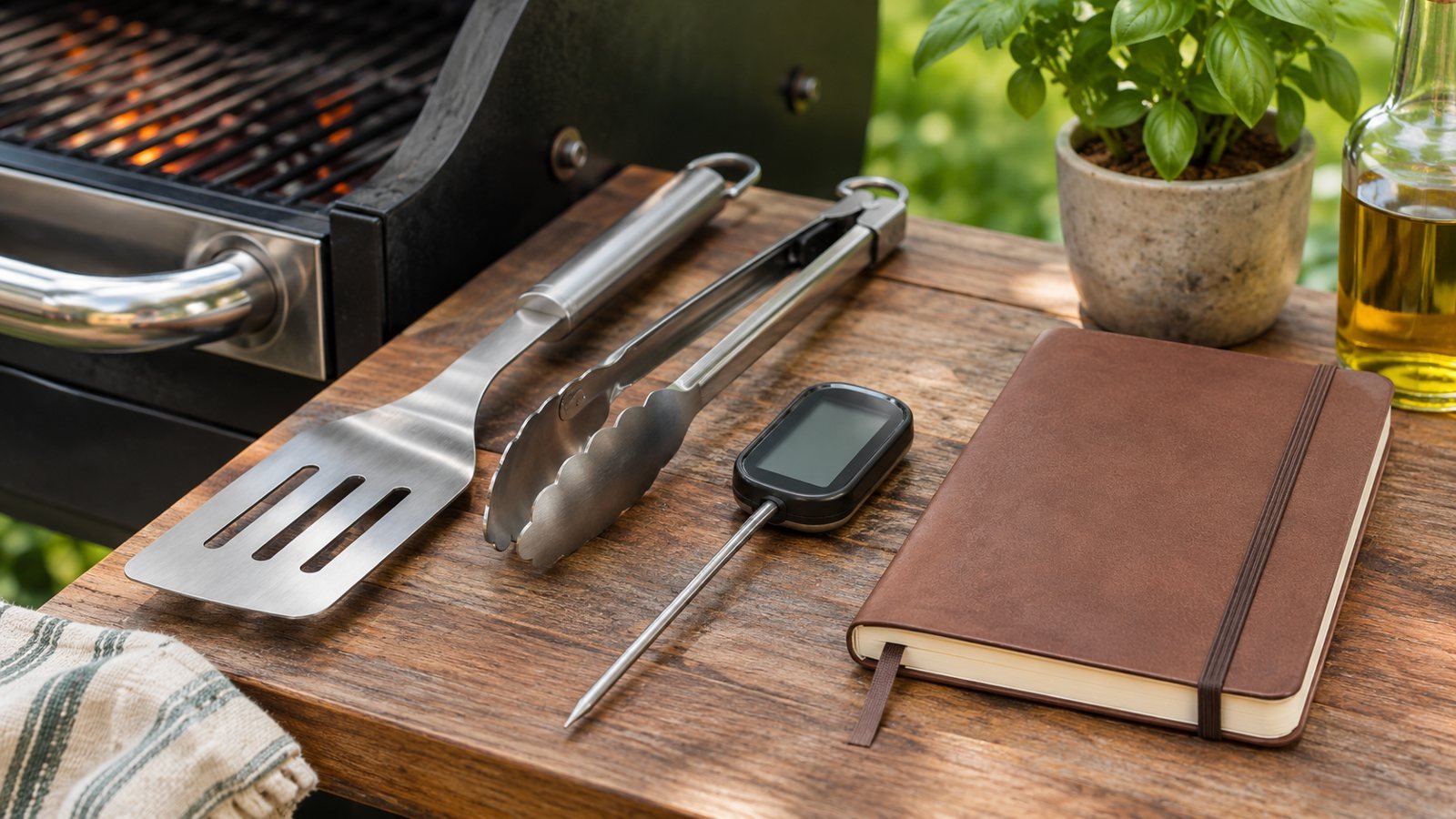
Research-led content is not a claim of hands-on testing. Food photographs illustrate outdoor cooking; they do not establish that a pictured appliance was reviewed.
Corrections and commercial relationships
Use Contact to report an error, with the article address and a source. We check the information and correct material mistakes. Commercial relationships must be disclosed with the relevant content. Read our Affiliate Disclosure for the policy on paid links, supplied equipment and sponsored work.